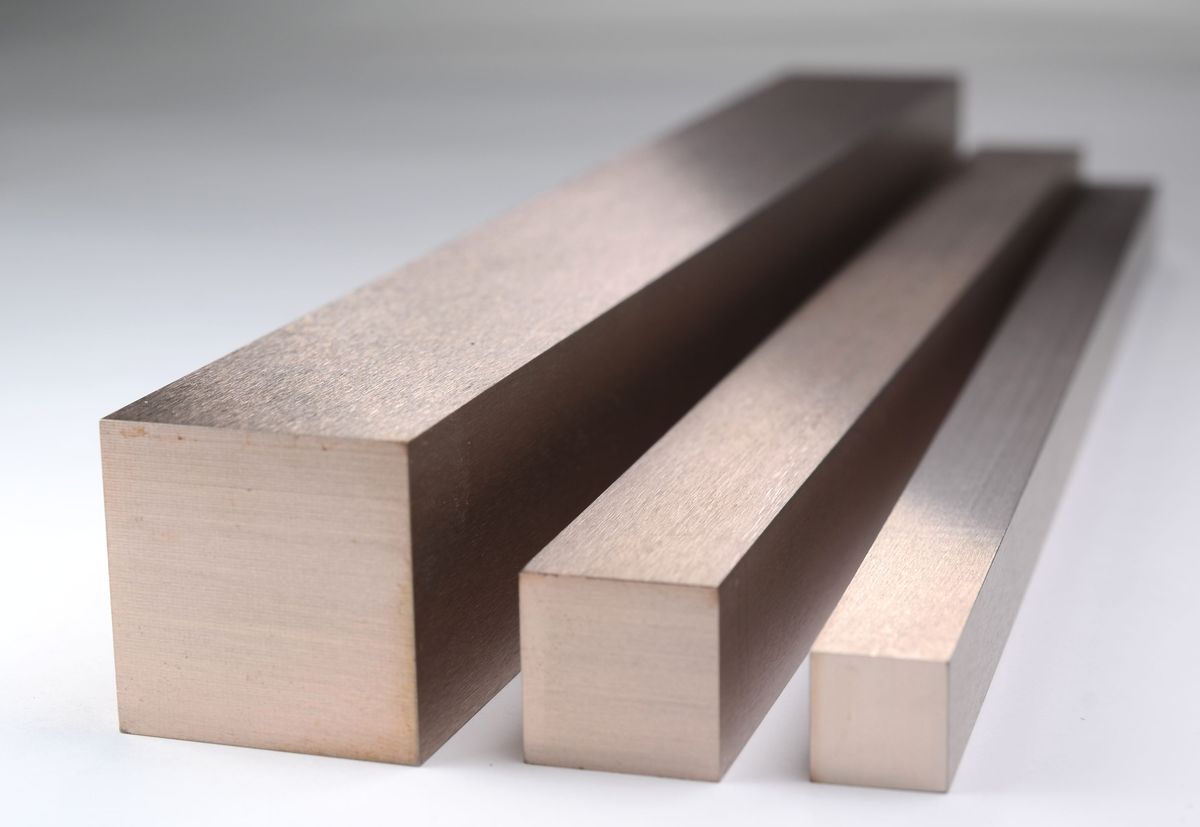
Refractory Metals for E-Mobility
Power electronics in drivetrains and charging infrastructure generate waste heat in the smallest of spaces, while switching contacts must withstand high current and switching peaks without burning away. Copper or aluminium alone provide good conductivity, but not the thermal stability or matched expansion coefficient — this is where composite and refractory materials come in.
Which Material for Which Function
Tungsten-Copper
Combines the thermal conductivity of copper with an expansion coefficient matched to chips and ceramics: heat sinks and contacts without thermomechanical stress.
Molybdenum-Copper
Lighter than tungsten-copper with a similarly matched CTE: heat spreaders for power semiconductors (IGBT, SiC).
Tungsten
High resistance to arc erosion: switching and welding contacts.
Molybdenum
Good electrical conductivity combined with high temperature resistance: electrode material.
Tantalum
High capacitance per unit volume: electrolytic capacitors in power electronics and charging infrastructure.
Components in Everyday Use
- Heat sinks under IGBT and SiC modules
- Heat spreaders in inverter assemblies
- Switching contacts in relays and contactors
- Welding contacts in battery manufacturing
- Tantalum electrolytic capacitors in chargers
Why Refracore. W-Cu and Mo-Cu are our specialty — we supply standard formats on short lead times via wolframkupfer.de, and custom mixing ratios plus CNC machining to drawing via Refracore. We advise on which conductivity-to-CTE ratio fits your chip or substrate combination.
Compare Thermal Management Materials
Describe your application — we'll get back to you within 1–2 business days with a technical assessment.